 Bayou Connections
Jacksonville, Florida. Founded 2024.
Bayou Connections
“A better future for all who inhaled oxygen this morning. Period.”
Every build here asks the same thing: what can be trusted, what still needs checking, and can an AI assistant show you which is which?
Bayou Connections LLC is the independent development lab of Amy J. Watson.

The origin
Why Bayou exists
It started with people, not with AI.
-
Community
My first project came from trying to build community within the veteran homeless population. It became Granny D Solutions, the first site I built with a community purpose: a family project, unpaid. grannydsolutions.com (opens in a new tab)
-
Tools
During that work, I realized I could build tools that help my community.
-
Information
Working with information exposed a deeper problem. Sourcing information and condensing it into a narrative can quietly separate a statement from the evidence behind it.
-
Evidence and provenance
That led me to provenance, source integrity, conflicting claims, uncertainty, and where human judgment has to stay in charge.
-
AI and trust
Bayou Connections became the hub for the projects I build to keep growing with AI, and the place where those questions turned into prototypes.
What Bayou is
- Bayou is my independent development and experimentation company. It is not a consultancy or an agency.
- It is self-funded, has one person, and has never had a client.
- I kept Bayou development deliberately separate from employer and client data. I build with my own data, synthetic data, public information, or information I am authorized to use.
Human assertion ≠ AI interpretation ≠ human-confirmed interpretation
“Source A states X” ≠ “X is true”
The work
Selected work
KC Cabinetry
3D design, with the craftsman’s rules underneath
KC Cabinetry
The question
Can a homeowner design a kitchen in 3D, and see what it might cost, without the software quietly pretending to be the cabinetmaker?
The build
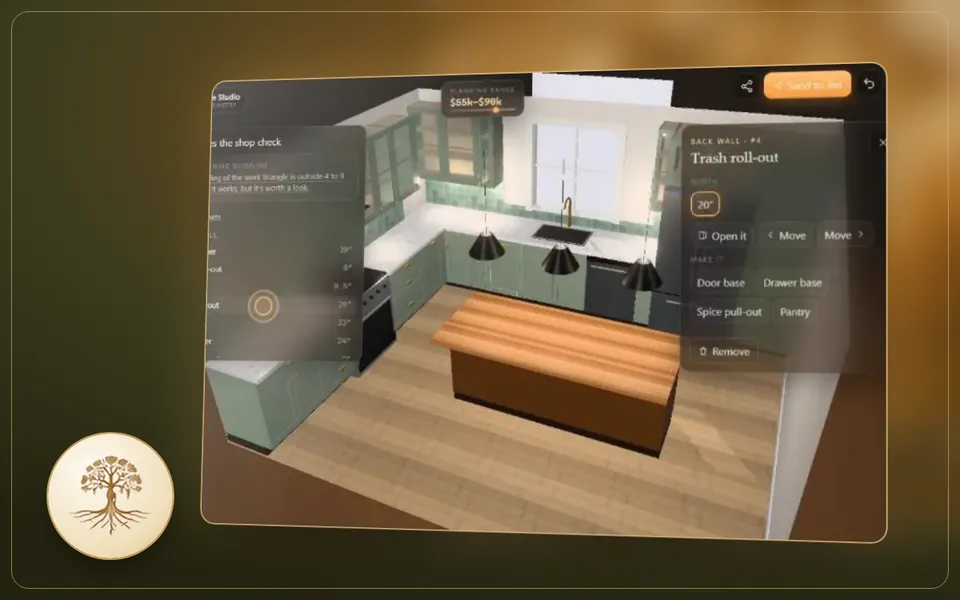
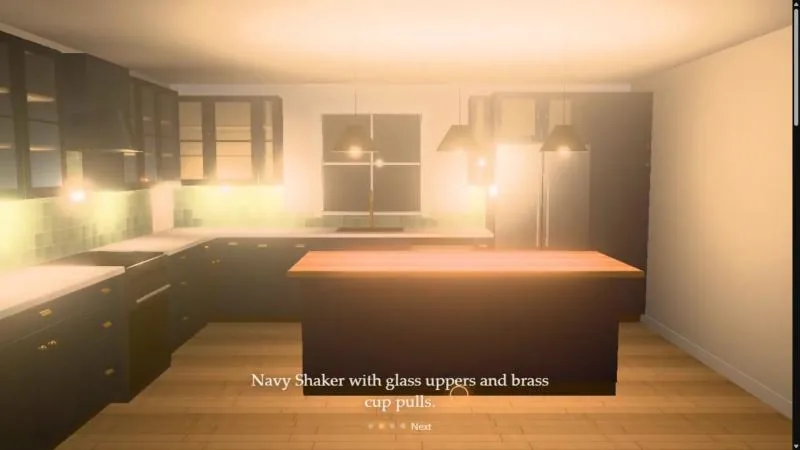
A working prototype, built with my brother Jim for his custom-cabinet shop. A homeowner designs a room in 3D: finish, doors, hardware, counters, walls and tile, even the light at a chosen time of day. They can ask for changes in plain words, like “swap the range and the sink”.
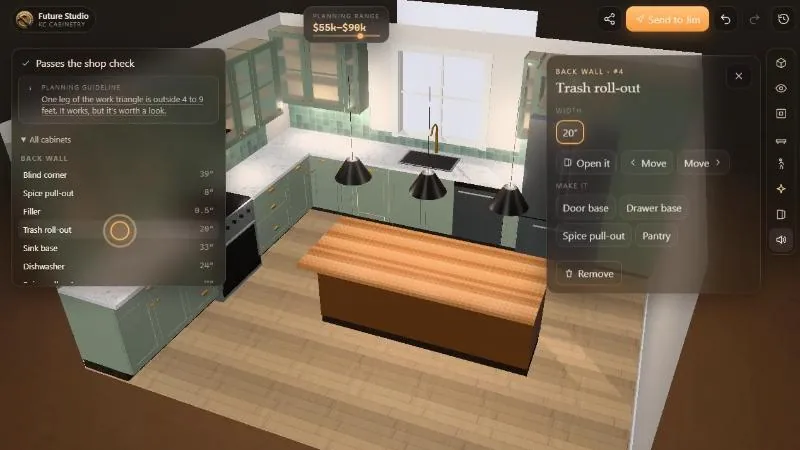
Every change is checked against how Jim builds. When something works but deserves a second look, the studio says so plainly, for example when one leg of the work triangle falls outside 4 to 9 feet.
A planning range moves as the design changes. It is labelled planning guidance, not a quote.
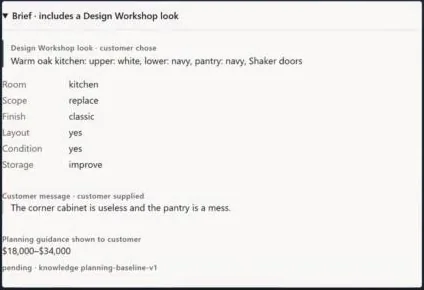
When the homeowner sends the design, Jim gets a brief that keeps its sources apart: what the customer chose, what the customer wrote in their own words, and the range they were shown.
The learning
This is the Trust Lab question in a kitchen. The customer’s words, the tool’s suggestions and Jim’s judgment are three different things, so the brief keeps them in separately labelled places.
The 3D is what people see first. What matters is the shop’s own rules sitting underneath it, so a beautiful design can’t quietly become one Jim can’t build.
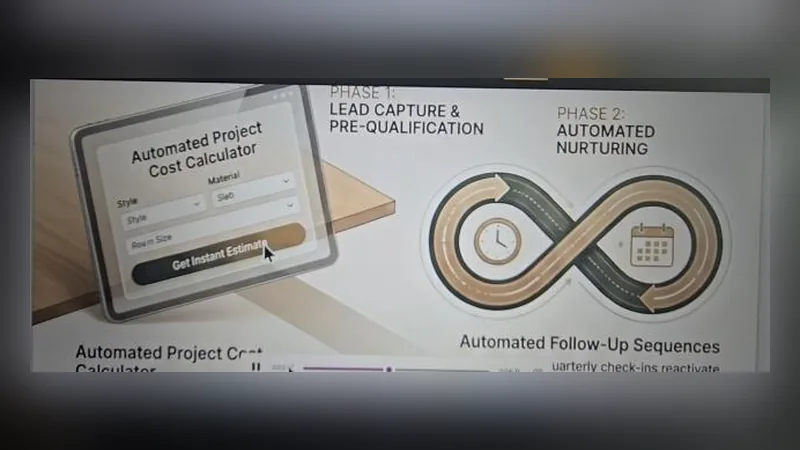
It grew in phases. The June version was a marketing site with a cost calculator, a free assessment and a plan for automated follow-up. Each phase since has moved more of the conversation into the room itself.
The boundary
What this page does not claim:
- This is a prototype Jim is reviewing. It is not open to the public; the live demo sits behind a sign-in.
- Planning ranges are guidance, not quotes. The ranges and rules shown are still waiting on Jim’s approval.
- Jim’s own design and manufacturing software stays the authority for what gets built. The site prepares the conversation; it doesn’t replace the cabinetmaker.
- Family work, not client work. No money changed hands.
The evidence
 Play “The 3D studio” (opens the YouTube player)
What this video shows
- 0:03 Title card: “Design a room in 3D, with Jim’s own shop rules built in.”
- 0:15 “Every change is checked against how Jim builds.”
- 0:36 A sage kitchen in 3D. A panel lists every cabinet on the back wall, a planning guideline flags the work triangle, and a trash roll-out is being edited.
- 1:02 The same kitchen in navy. The conversation panel reads “Done: swap the range and the sink.”
- 1:25 “Pick the light”: the room is rendered at a chosen time of day.
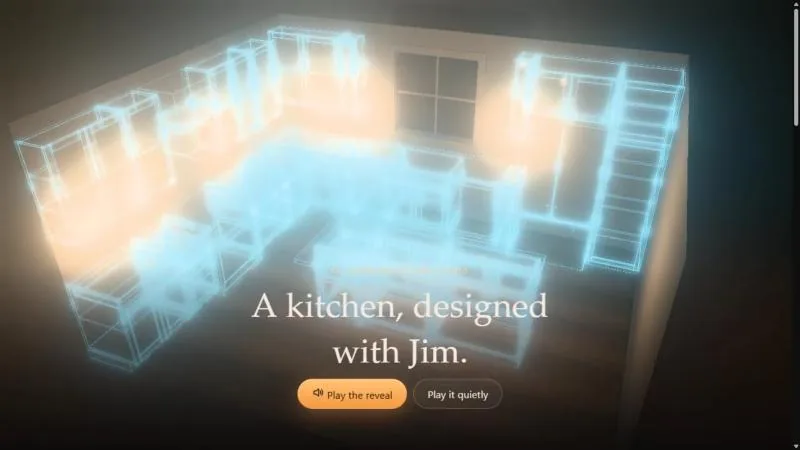
- 1:36 A glowing wireframe reveal: “A kitchen, designed with Jim.” Then the lit room: navy Shaker with glass uppers and brass cup pulls.
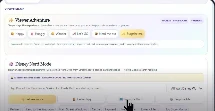
- 2:00 The start screen, “Come on in. Let’s build something.”, and three suggested layouts: L-shape with island, U-shape with island, one wall with island.
 Play “The demo Jim is reviewing” (opens the YouTube player)
What this video shows
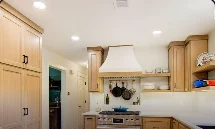
- 0:05 “Jim’s own rooms. Tap a look. Watch the room change.” A photo of a finished oak kitchen.
- 0:22 Seven rooms ready to try, including a basement bar.
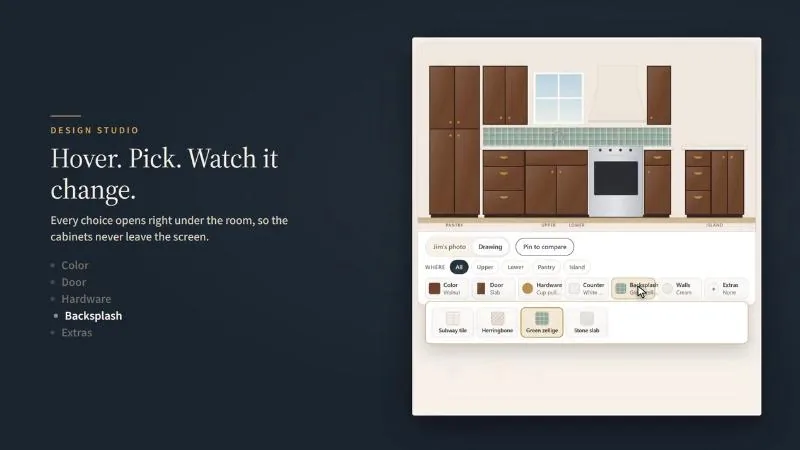
- 0:40 Design studio: hover and pick a color, door, hardware, backsplash or extras, and the cabinets never leave the screen.
- 0:58 Live estimate: “A planning range that narrows with every answer. Colors never move the price.” The card reads “Planning range, not a quote.”
- 1:16 “Nothing gets lost.” Jim’s brief separates the look the customer chose, the customer’s own message, and the planning guidance they were shown.
 Play “The first phase, June 2026” (opens the YouTube player)
What this video shows
- 0:08 The first homepage: “Where historic charm meets modern luxury.”
- 1:40 A free refacing-or-replacing assessment.
- 3:50 A plan in phases: lead capture with an automated cost calculator, then automated follow-up.
- 6:00 Phase 3: translating a design toward manufacturing.
- 8:00 An owner theme studio where Jim can choose the site’s own finish and colors.
What this page claims
| Statement | Comes from | Notes |
|---|---|---|
| A homeowner can design a room in 3D and change finish, doors, hardware, counters, walls, tile and lighting. | Shown in recording Prototype | Toolbar and panels in the 3D video. |
| Changes can be asked for in plain words. | Shown in recording Prototype | On-screen: “Done: swap the range and the sink.” and “Or type: make the island walnut”. |
| Every change is checked against Jim’s shop rules; guidelines are flagged, e.g. the work triangle. | Shown in recording Prototype | On-screen: “Every change is checked against how Jim builds.” and “Passes the shop check”. |
| The planning range is guidance, not a quote, and still waiting on Jim’s approval. | Shown in recording Prototype | On-screen: “Planning range, not a quote… These ranges are still waiting on Jim’s approval.” |
| Jim’s brief separates what the customer chose, what they wrote, and the range they were shown. | Shown in recording Prototype | |
| The June 2026 first phase had a cost calculator, free assessment and planned automated follow-up. | Shown in recording | Shown in the June walkthrough video. |
| Built with Amy’s brother Jim for his shop; no money exchanged; Jim is reviewing the latest demo. | Amy stated | |
| The photos of finished rooms in the design-studio video are Jim’s own work. | Shown in recording | On-screen label “Jim’s own rooms”. Amy to confirm. |
| Jim’s design and manufacturing software stays the authority for what gets built. | Amy stated | From Amy’s earlier direction for the app. The software is not named on this page. |
| The live demo is not public; it sits behind a sign-in. | In the artifacts | The demo address opened a Cloudflare Access sign-in on 2026-10-08. Nothing behind it was viewed. |
How to read the labels
- Prototype
- Working, but exploratory. Not a product.
- Experiment
- Built to find something out.
- Paused
- Stopped on purpose, waiting on something.
- Unverified
- Not yet checked against evidence.
- Amy stated
- Amy said this directly.
- Shown in recording
- Visible in a published screenshot or video on this page.
- In the artifacts
- Written in the project’s own (synthetic) files.
- Inferred
- A reasonable reading, not confirmed.
- Unknown
- Not established either way.
StreamScout
Live data, privacy and permission
StreamScout
The question
When fast-changing data from someone else’s platform flows into a viewer’s experience, what has to stay true underneath it: where it came from, how fresh it is, what is private, and what I am actually allowed to do with it?
The build
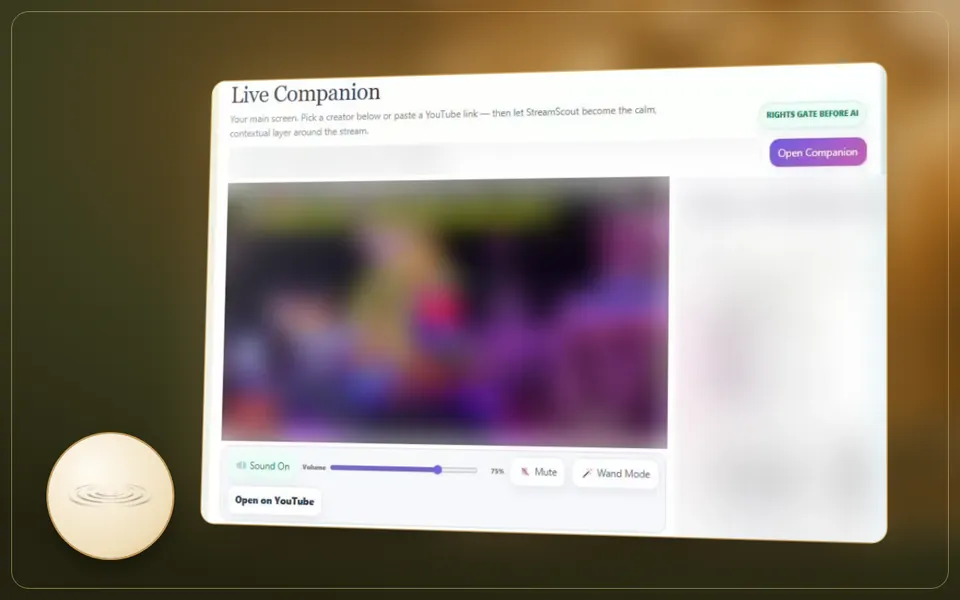
A working prototype that connects to YouTube data. A viewer chooses the creators who matter to them, and a calm companion sits beside the live stream instead of replacing it.
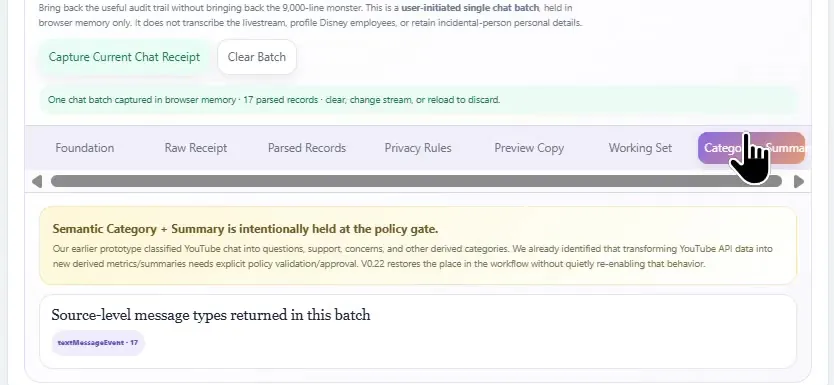
Underneath, a “receipt” layer. When the viewer asks, StreamScout captures one batch of chat, keeps it in browser memory only, and shows the raw receipt, the parsed records, the privacy rules applied, and the working set as separate stages.
The learning
Capability is not permission. An earlier version sorted chat into derived categories like questions and concerns. I pulled that back to a policy gate once I recognised that turning API data into new derived summaries needs explicit validation first.
The interesting engineering was not the AI. It was keeping external data, its state, and its provenance explicit, so nothing quietly became something it was not.
The boundary
What this page does not claim:
- StreamScout is a personal prototype, not a public product.
- This page does not claim YouTube approval, certification, or policy compliance.
- Derived AI features are held at the gate. They are not shipped.
The evidence
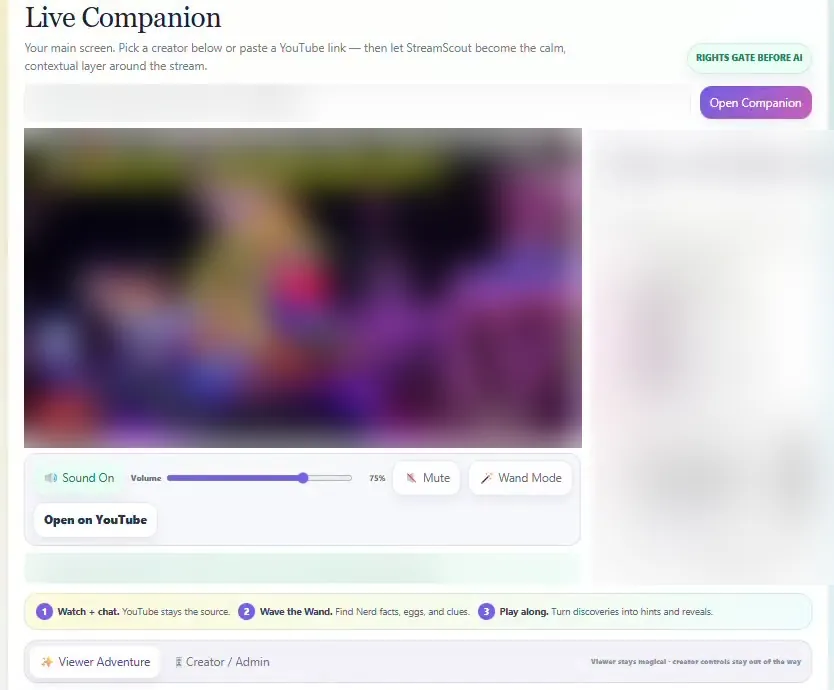
Held back The full recorded walkthrough is not published here yet. It shows other creators’ thumbnails and video, which still need to be blurred.
What this page claims
| Statement | Comes from | Notes |
|---|---|---|
| StreamScout connects to YouTube data. | Amy stated Prototype | Confirmed by Amy; the YouTube player and “Load your public YouTube subscriptions” are visible in the recording. |
| A viewer can choose creators and open a companion beside a live stream. | Shown in recording Prototype | |
| Chat is captured only when the viewer asks, one batch at a time, held in browser memory. | Shown in recording Prototype | On-screen text: “user-initiated single chat batch, held in browser memory only”. |
| Derived chat categorisation and summaries are held at a policy gate, not enabled. | Shown in recording Prototype | On-screen text cites V0.22 restoring the stage “without quietly re-enabling that behavior”. |
| An earlier version did classify chat into derived categories. | Shown in recording | Stated in the on-screen policy-gate notice. |
| Third-party creator content is blurred in the published images. | Shown in recording | Blurring applied for this site, at Amy’s request. |
How to read the labels
- Prototype
- Working, but exploratory. Not a product.
- Experiment
- Built to find something out.
- Paused
- Stopped on purpose, waiting on something.
- Unverified
- Not yet checked against evidence.
- Amy stated
- Amy said this directly.
- Shown in recording
- Visible in a published screenshot or video on this page.
- In the artifacts
- Written in the project’s own (synthetic) files.
- Inferred
- A reasonable reading, not confirmed.
- Unknown
- Not established either way.
Bayou Console
Legacy code, provenance and human review
Bayou Console
The question
When you inherit code that nobody documented, how do you explain what it does without inventing why it does it?
The build
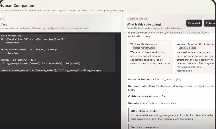
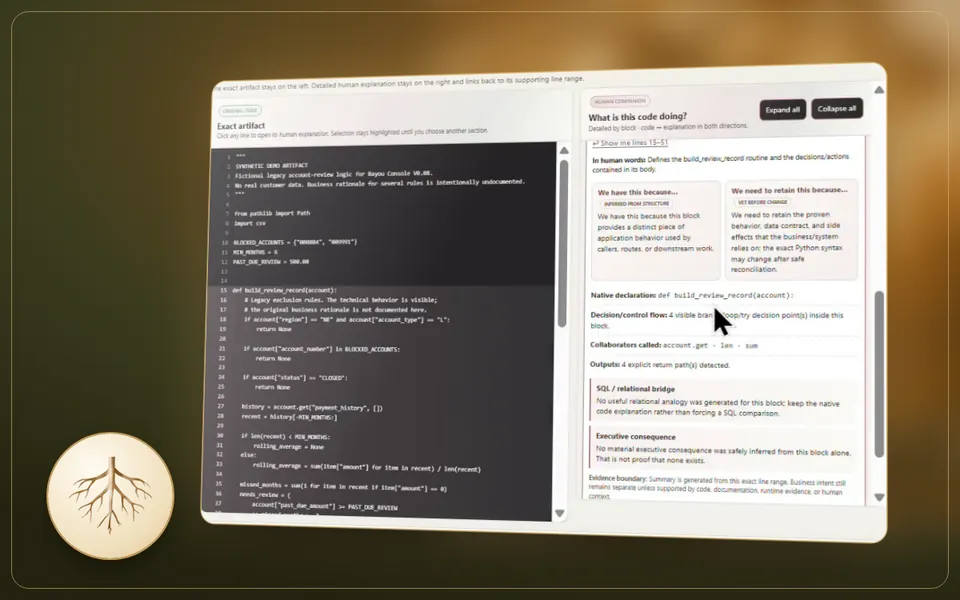
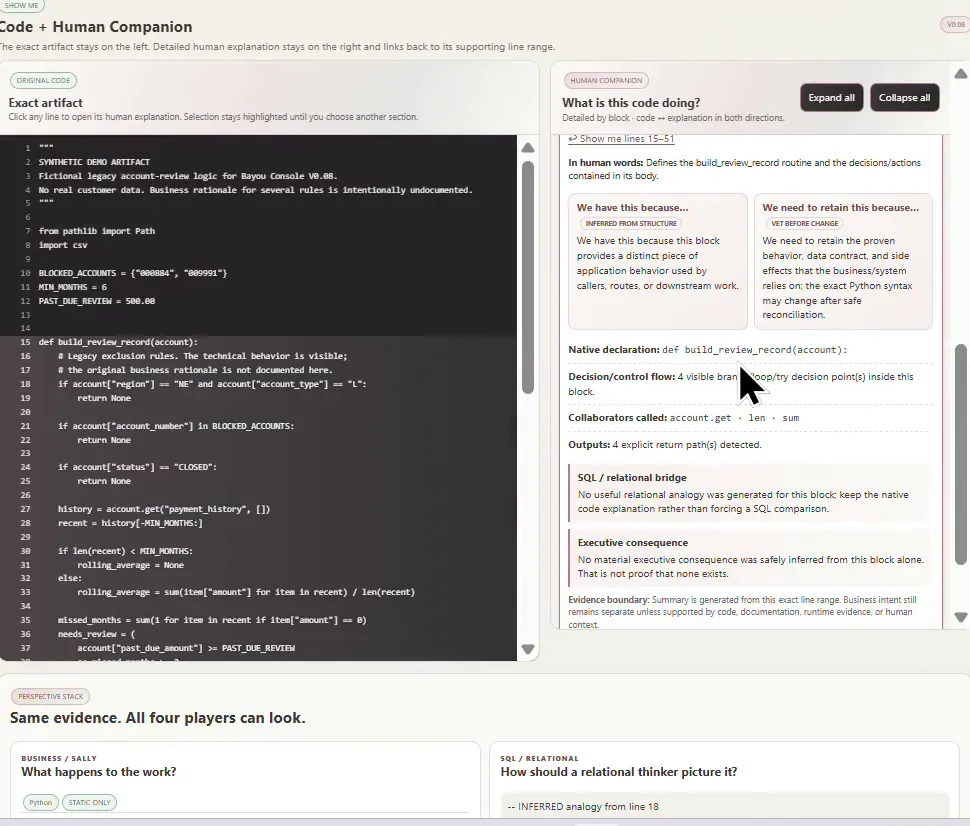
A local console that takes a legacy artifact (SQL, Python or C++), fingerprints it with SHA-256, and reads it statically. Adding an artifact never runs it.
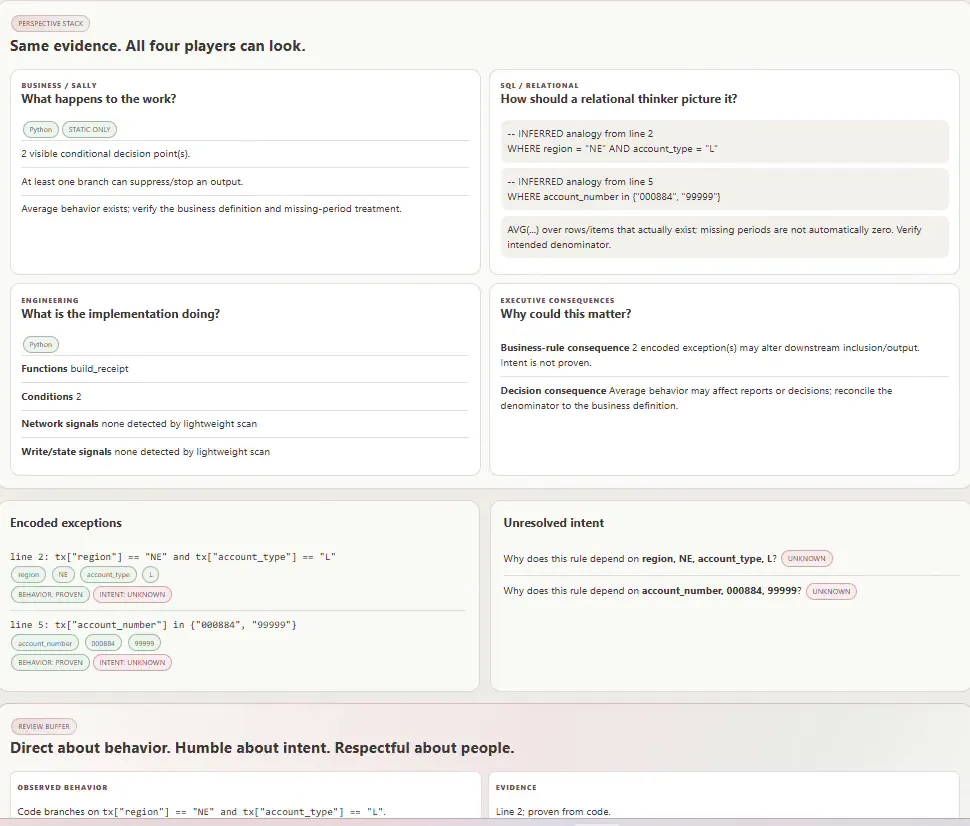
The same evidence is explained four ways: for the business, for engineering, for a relational thinker, and for an executive. Each explanation stays linked to the exact lines that support it.
Where the code shows behaviour but not reasons, the console says so: behaviour proven, intent unknown.
The learning
Readable code is not the same as understandable behaviour. And understandable behaviour is not the same as known intent.
The most useful thing the console does is refuse to fill a gap. An honest “unknown” gives a reviewer something to go and ask about.
The boundary
What this page does not claim:
- Every artifact in the demo is synthetic: invented companies, accounts and notes.
- It is a prototype for understanding, not a tool for modernising production systems.
- The demo includes my own mapping to a public AI risk framework. That is my reading, not an assessment or certification.
The evidence
What this page claims
| Statement | Comes from | Notes |
|---|---|---|
| Bayou Console reads SQL, Python and C++ artifacts statically. | Shown in recording Prototype | |
| Adding an artifact never executes it. | Amy stated Prototype | Amy’s stated boundary; the recording shows “Executed: NO”. |
| Each artifact is fingerprinted with SHA-256. | Shown in recording Prototype | |
| The same evidence is explained for four perspectives, linked to source lines. | Shown in recording Prototype | |
| Undocumented intent is labelled unknown rather than guessed. | Shown in recording Prototype | |
| All demo artifacts are synthetic. | In the artifacts | Each sample file is headed “SYNTHETIC DEMO ARTIFACT”. |
| The framework mapping is Amy’s own reading, not an assessment. | Inferred | The recording shows a NIST AI RMF crosswalk. Amy should confirm this wording. |
How to read the labels
- Prototype
- Working, but exploratory. Not a product.
- Experiment
- Built to find something out.
- Paused
- Stopped on purpose, waiting on something.
- Unverified
- Not yet checked against evidence.
- Amy stated
- Amy said this directly.
- Shown in recording
- Visible in a published screenshot or video on this page.
- In the artifacts
- Written in the project’s own (synthetic) files.
- Inferred
- A reasonable reading, not confirmed.
- Unknown
- Not established either way.
Bayou Audit
Source records, patterns and questions
Bayou Audit
The question
When a report can’t be trusted at face value, how do you go underneath it without losing the connection to the original record?
The build
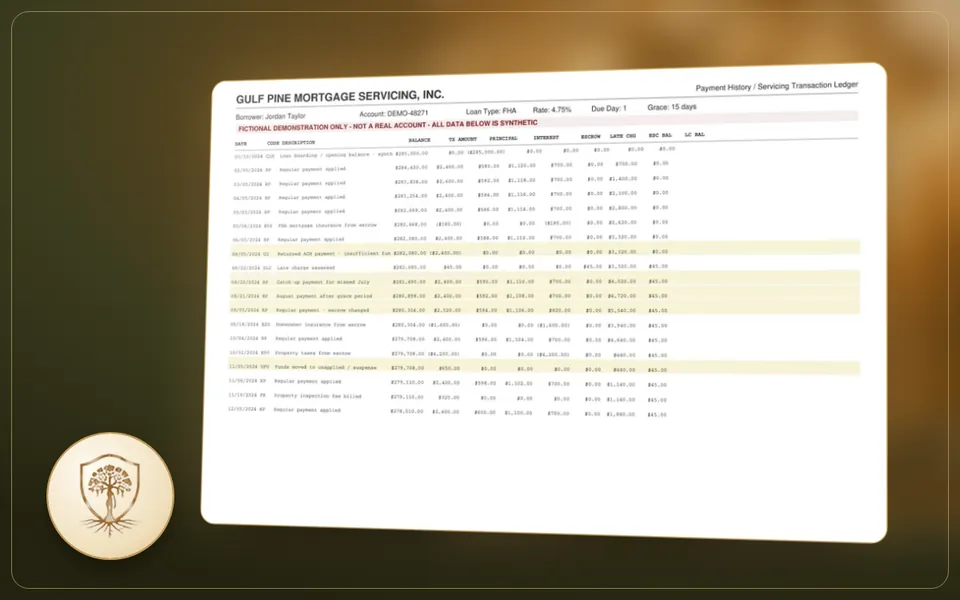
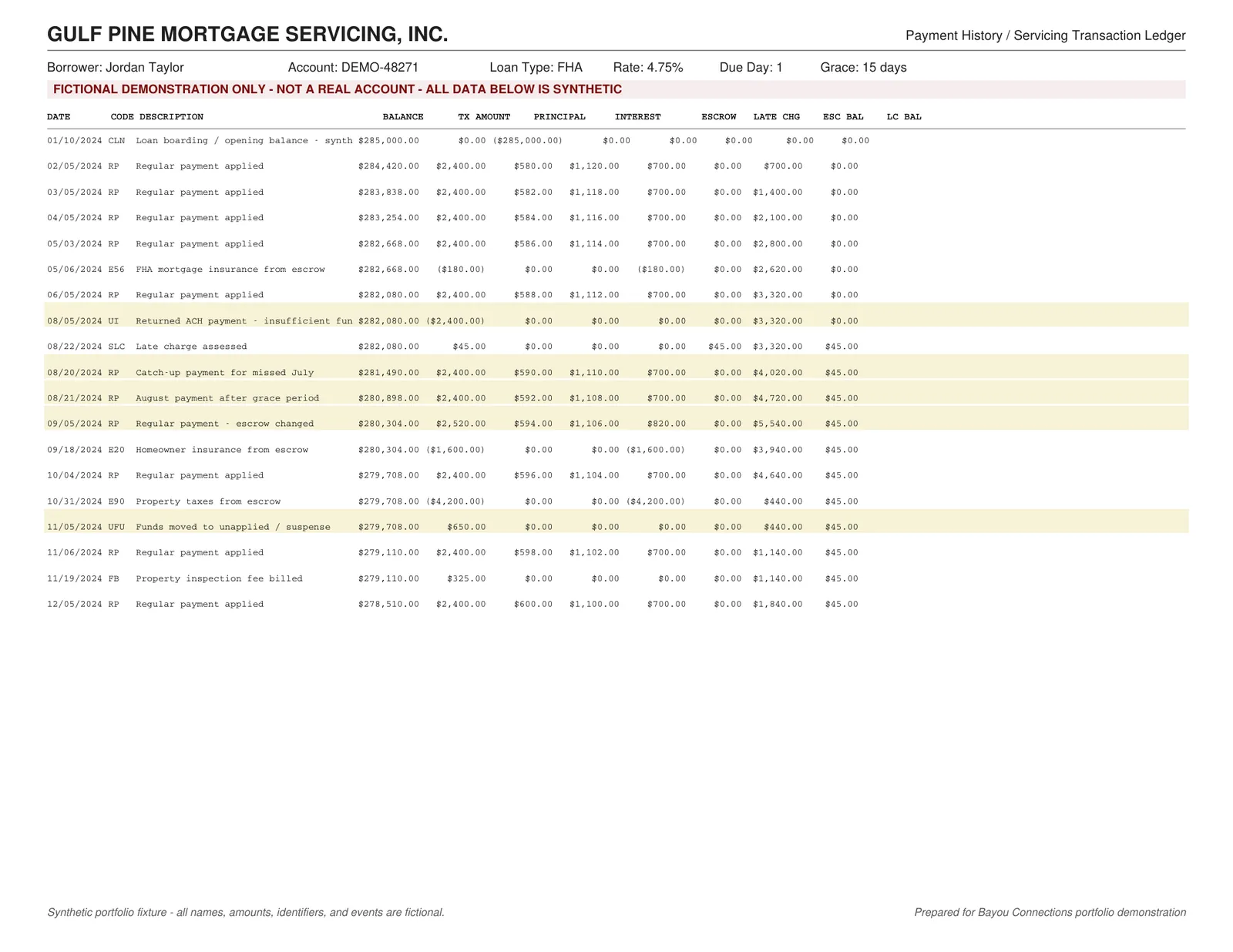
A working prototype that turns a payment ledger into a reviewable journey. Every pattern it surfaces stays tied to the source rows it came from.
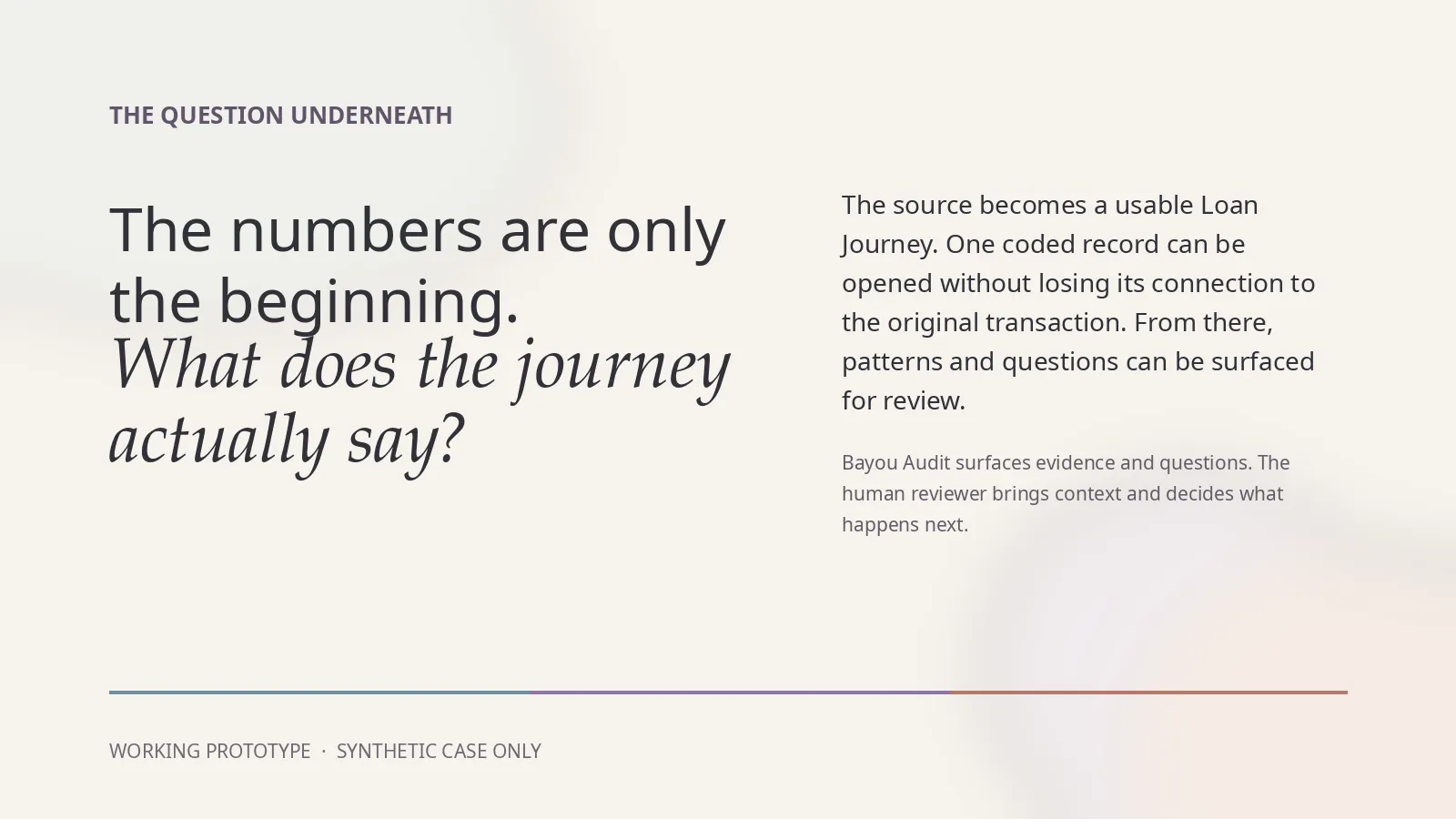
Patterns are presented as questions for a human reviewer, not as findings.
The learning
A ledger line establishes that the ledger says a payment was applied. It does not, on its own, establish that the payment was applied correctly. Keeping those two apart is most of the work.
The tool surfaces evidence and questions. The person reviewing brings context and decides what happens next.
The boundary
What this page does not claim:
- The servicer, the borrower and every figure are fictional.
- Nothing here is legal or financial advice, and this page makes no claim that the prototype has been validated on real accounts.
The evidence
What this page claims
| Statement | Comes from | Notes |
|---|---|---|
| Bayou Audit turns a ledger into a reviewable journey tied to source rows. | Shown in recording Prototype | |
| Patterns are presented as questions for a human reviewer. | Shown in recording Prototype | On-screen: “Bayou Audit surfaces evidence and questions. The human reviewer brings context and decides what happens next.” |
| The demo ledger, servicer and borrower are fictional. | In the artifacts | The demo PDF carries a synthetic-data banner. A second ledger file (FAKE_CUSTOMER_001) is not used on this site; Amy is adding a banner to it. |
How to read the labels
- Prototype
- Working, but exploratory. Not a product.
- Experiment
- Built to find something out.
- Paused
- Stopped on purpose, waiting on something.
- Unverified
- Not yet checked against evidence.
- Amy stated
- Amy said this directly.
- Shown in recording
- Visible in a published screenshot or video on this page.
- In the artifacts
- Written in the project’s own (synthetic) files.
- Inferred
- A reasonable reading, not confirmed.
- Unknown
- Not established either way.
Other tributaries
Real projects, told briefly
Other tributaries
-

Two care stages from the Bonsai Calm prototype. Bonsai Roots Legacy Toolkit
PausedA care-history prototype for living bonsai. I paused development because I can’t decide on my own which features would actually help keepers. It waits on someone with real horticultural expertise.
-

A design generated in the Ear Design Studio experiment. Ava & Jax Ear Design Studio
ExperimentIt started as “can AI make me cool ears?” Not for sale. Just an “if AI could” experiment that taught me how much human direction and judgment it takes to turn possibilities into something real.
A working notebook
Trust Lab
A working notebook on appropriately calibrated trust between people and AI assistants. These are questions I am exploring, not findings. Nothing here is peer-reviewed research, and entries change when the evidence does.
How one observation branches
- source
- claim
- evidence
- interpretation
- decision
- new evidence
The goal
The goal is not to make people trust AI more. It is to help people see what deserves trust, what needs verification, what the assistant actually knows, what it inferred, what came directly from the person, and why.
People carry history, experience, judgment, responsibility, relationships, biases, values, and moral baggage that an AI assistant cannot completely reproduce.
That matters when people start disclosing more, verifying less, and delegating more because an assistant appears to “know” them. Continuity, memory, inference, and actual understanding are not automatically the same thing.
This is a current trust-and-safety problem, not a hypothetical one.
How a “truth” grows away from what was said
- Treated as “truth”Use rustic fonts on everything.
- Treated as “truth”She would dislike modern tools.
- Treated as “truth”Never show her clean designs.
- Treated as “truth”Simple must mean wrong for her.
- Assistant inferredShe prefers rustic styles.
- Assistant inferredShe dislikes minimal layouts.
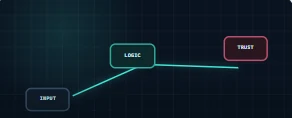
Each branch is a step further from the root. If provenance does not travel with a claim, the tips of the tree start getting treated as fact, and they can end up far from the truth. Human assertion, AI interpretation, and human-confirmed interpretation should stay separate.
Source ≠ truth
- Established
- The servicer’s ledger states that a payment was applied on March 5.
- Not established
- The payment was applied correctly on March 5.
“Source A states X” can be a fact even when “X is true” has not been established.
Questions I’m exploring
Memory and provenance
- OpenWhat does an AI assistant actually remember?
- OpenWhat was stated directly by the person, what was inferred by the AI, and what was later confirmed?
- OpenCan provenance travel with a claim?
- OpenWhat information has to persist across sessions for trust to stay appropriately calibrated?
Disagreement and uncertainty
- OpenWhat should happen when two sources disagree?
- OpenWhen should uncertainty be preserved instead of resolved?
Reliance
- OpenDoes apparent continuity cause people to verify less?
- OpenHow should an AI communicate the limits of what it “knows” about a person?
Notes from the builds
 KC Cabinetry
The brief to Jim labels every line: what the customer chose, what they wrote in their own words, and the range they were shown.
 StreamScout
Capability isn’t permission. A derived feature that worked was pulled back to a policy gate until its use was validated.
 Bayou Console
An honest “unknown” is more useful to a reviewer than a confident guess about intent.
 Bonsai Roots
I stopped adding features when I could no longer judge, on my own, which ones would help.
How I build
Principles
Icons from the bayou: roots, water, branches, acorns, the live oak, and the gator that guards the edge.
-

Evidence before assertion
Preserve what supports a conclusion, so someone else can check it.
Seen in the work: Bayou Audit keeps every pattern tied to its source rows.
-

Source ≠ truth
A source can establish that a claim was made without establishing the claim as fact.
-

Inference should look like inference
Do not silently convert AI interpretation into human intent.
Seen in the work: Bayou Console tags intent as unknown.
-

Uncertainty is information
Do not erase disagreement just to make an answer cleaner.
-

Humans remain in the loop
Especially where context, ethics, impact, ambiguity, or responsibility matter.
Seen in the work: In KC Cabinetry, Jim confirms the measurements and the final price.
-

Trust should be calibrated
More trust is not automatically better.
-

Build with data you have the right to use
Bayou was deliberately isolated from employer and client data.
-

Boundaries are features
A system should make its limits visible.
Seen in the work: In Bayou Console, adding an artifact never executes it.
The person
About Amy
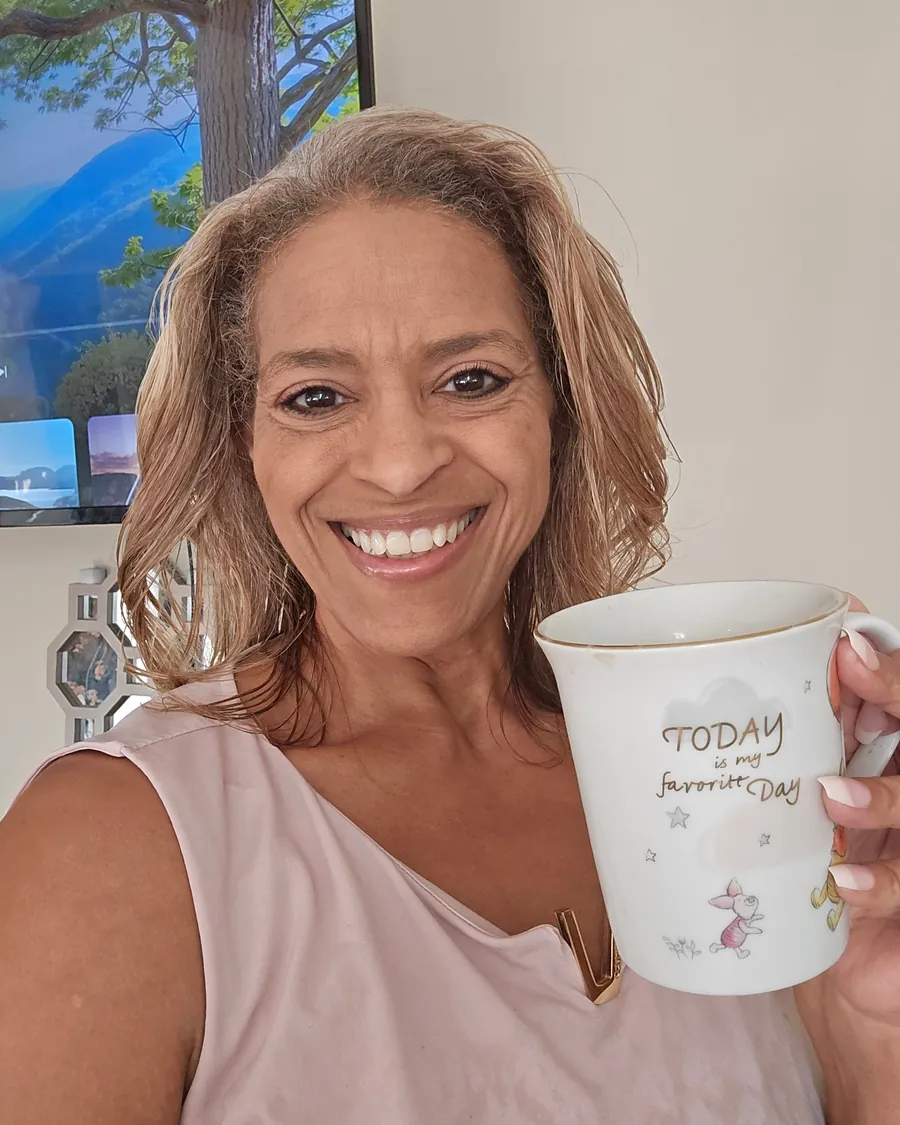

Amy J. Watson
Founder / Developer
I’m Amy J. Watson. I’ve spent decades working with systems, data, requirements, SQL, ETL, investigation, integration, and messy information problems.
Bayou became the place where I could explore AI independently. I am experimenting, testing, building, learning, and changing my mind when the evidence warrants it.
Mentoring has been a recurring part of my life, professionally and personally, even when nobody called it that.
I want to take part in responsible AI development, and build things I would feel good explaining to my children and grandchildren. Tools my grandchildren can be proud of.
The network
Questions, corrections, or a better question?
Email is the best way to reach me. If something on this page is wrong, I want to know and I welcome the conversation.
Let’s build better branches together!
Email AmyLinkedIn (opens in a new tab)Live portfolio (opens in a new tab)
Amy J. Watson, Founder / DeveloperBayou Connections LLC, Jacksonville, Florida
amyjwatson@bayouconnections.com
Every project claim on this site is labelled with where it comes from.
© 2026 Bayou Connections LLC
Corporate data or family data, the questions are the same: where did it come from, who is it for, and what can it be trusted to do?